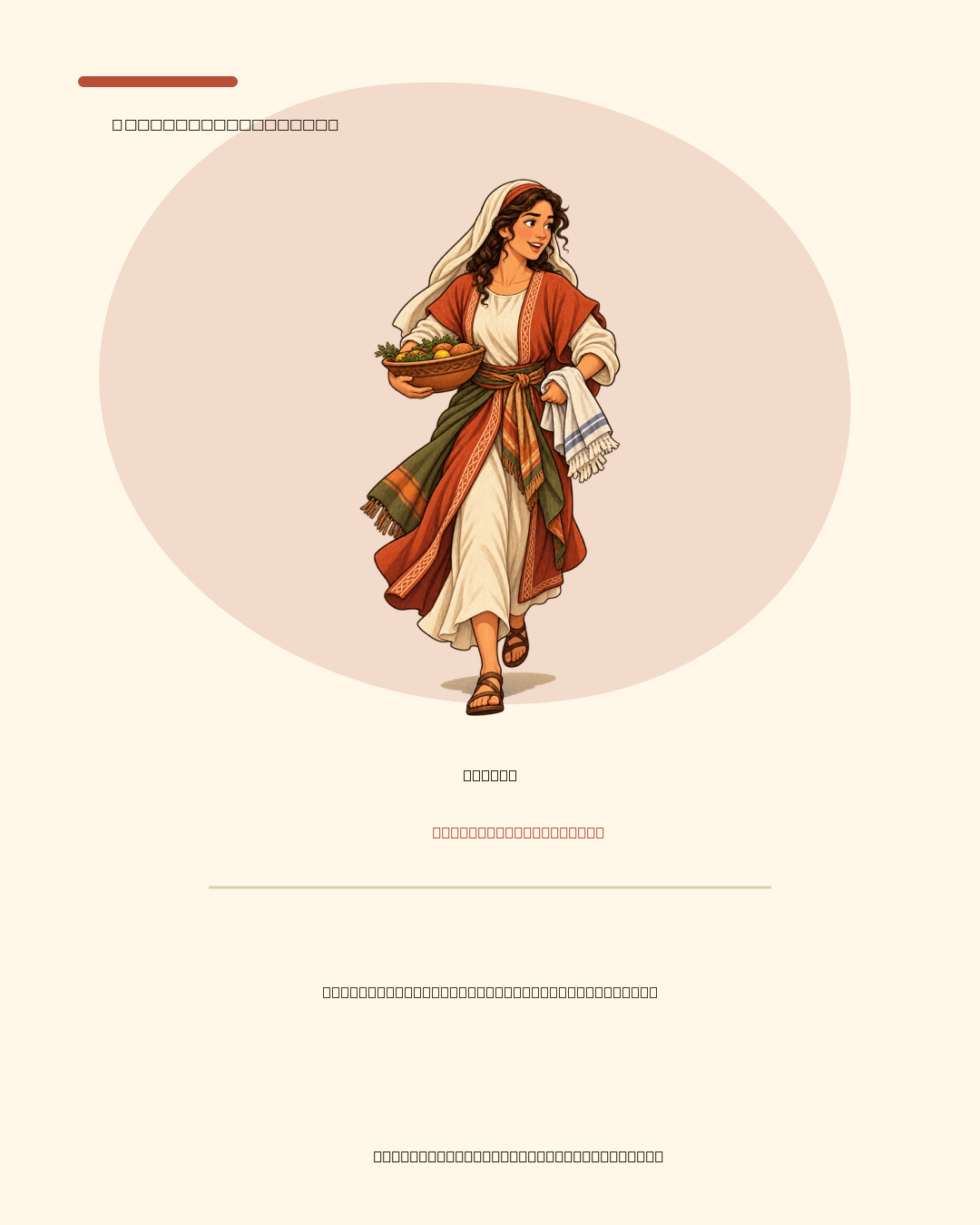
How you decide
You notice the task nobody organised and take it. The meal, the space, the waiting person: you handle what is in front of you.

“Care, in your hands, looks like a finished task.”
Character profile
You meet the need in front of you and speak plainly when something matters.
Why this match
You notice the task nobody organised and take it. The meal, the space, the waiting person: you handle what is in front of you.
Frustration comes out of you in plain words, straight to the person involved. Then you go back to serving.
People feel cared for because the practical things around them work. Your hands say it before your words do.
Measured, not guessed
In a group
You turn concern into hospitality, order, and a finished task. People often feel cared for because you noticed what would make the space or situation work.
Keep watch
In Luke 10, Martha became distracted, worried, and troubled while serving. Useful work can narrow your attention until the task seems more important than the person before you.
The character behind it
Martha welcomed Jesus into her home, served, voiced frustration directly, went out to meet Him after Lazarus died, and made a clear confession about who He is. She should not be reduced to busyness; her story also shows direct conversation, theological confidence, grief, hospitality, and continued service after correction. Your answers followed her practical pattern: notice the meal, the task, and the waiting person, and let care become visible in your hands.
Where we see it
Read the passages in context. The profile comes from repeated actions, including correction and failure where Scripture records them.
“Yes, Lord, I believe that You are the Christ, the Son of God.”
John 11:27, NKJV
Your wider table

Kindred spirit
The Loyal Provider

Kindred spirit
The Strategic Builder

Growth companion
The Attentive Disciple
A growth companion is not a better character. They tend to respond in ways you may use less often.
Your turn
A closest match, not a spiritual label: this quiz compares your choices with ten response dimensions across twenty character profiles drawn from the biblical narratives. It does not measure faith, maturity, calling, gifting, or identity in Christ. You share behaviours with many people, and your response can change across situations.