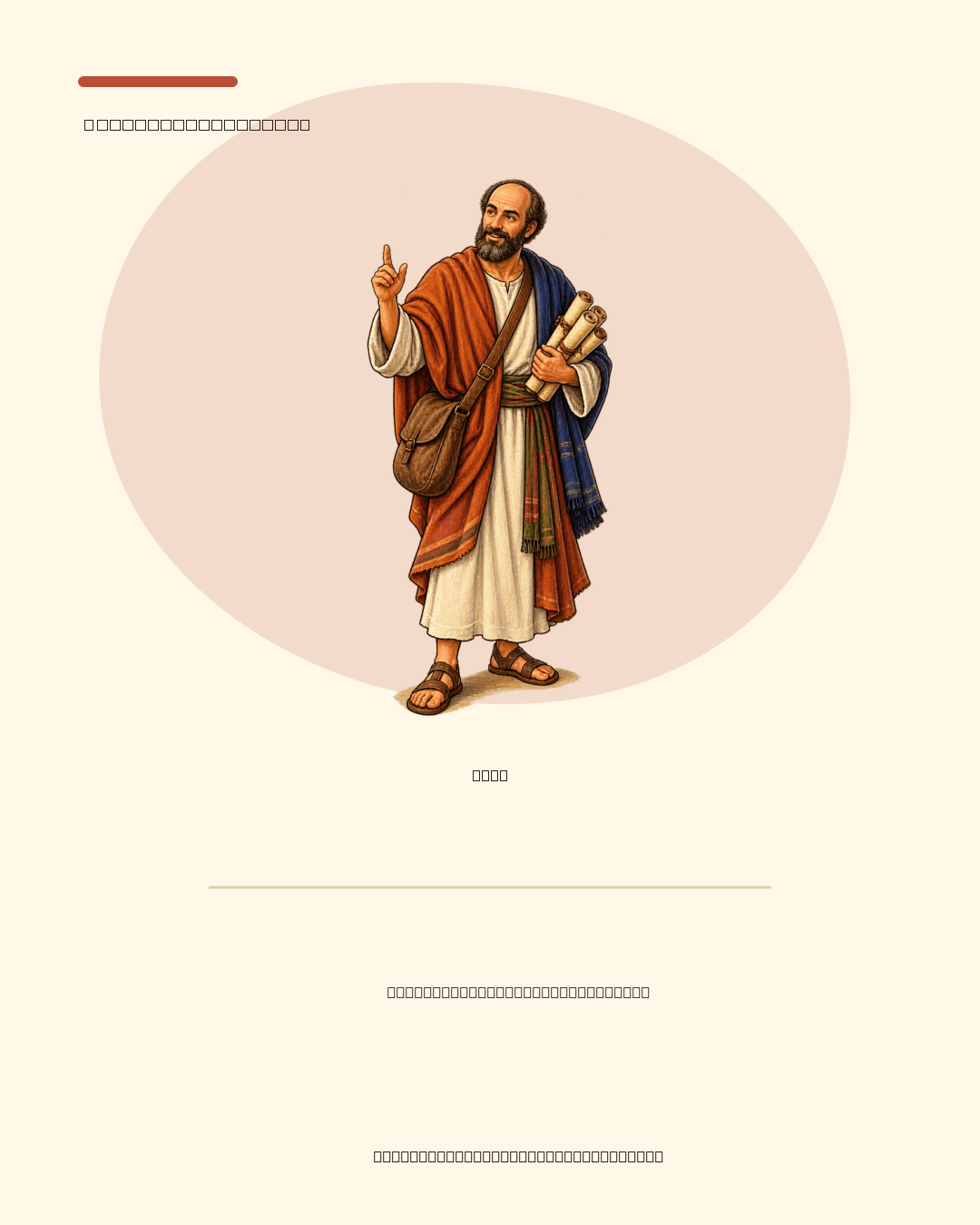
How you decide
You connect action to explanation. Starting matters to you, and so does helping people understand why it matters.

“You want people to know why, so the work outlives you.”
Character profile
You turn conviction into explanation, movement, and a long horizon.
Why this match
You connect action to explanation. Starting matters to you, and so does helping people understand why it matters.
Opposition changes your route more often than your mission. You keep teaching, travelling, and training through it.
People catch direction and reasons from you at the same time. The work continues after you leave because you prepared someone.
Measured, not guessed
In a group
You can give a group both direction and reasons. People are more likely to continue the work when you explain the purpose and prepare someone else to carry it.
Keep watch
Paul had persecuted believers, and Acts 15 records a sharp disagreement with Barnabas. Strong mission and strong reasoning still need patience with people and room for another judgment.
The character behind it
After his conversion, Paul reasoned in synagogues and public spaces, crossed regions, formed communities, wrote careful instruction, trained coworkers, and continued through opposition. This result is not a claim about apostleship. It is a match to repeated teaching, initiative, movement, mentoring, and persistence across changing places. Your answers followed that mission-driven pattern: connect the action to the explanation, and prepare someone else to continue the work.
Where we see it
Read the passages in context. The profile comes from repeated actions, including correction and failure where Scripture records them.
“I press toward the goal for the prize of the upward call of God in Christ Jesus.”
Philippians 3:14, NKJV
Your wider table

Kindred spirit
The Collaborative Mentor

Kindred spirit
The Teachable Successor

Growth companion
The Encouraging Advocate
A growth companion is not a better character. They tend to respond in ways you may use less often.
Your turn
A closest match, not a spiritual label: this quiz compares your choices with ten response dimensions across twenty character profiles drawn from the biblical narratives. It does not measure faith, maturity, calling, gifting, or identity in Christ. You share behaviours with many people, and your response can change across situations.